
News
Chemical Composition and Low-Temperature Metallurgy
Achieving reliable low-temperature performance requires precise metallurgical limits to keep the carbon steel pipe pliable and ductile in sub-zero environments.
Fine-Grain Carbon Optimization: Carbon is restricted to ≤ 0.30% to ensure excellent weldability and malleability, avoiding hardness-induced brittleness. Manganese (0.29% - 1.06%) is added to improve baseline tensile strength.
Eliminating Detrimental Impurities: Elements like Phosphorus (P) and Sulfur (S) are capped at ≤ 0.025% each. Minimizing these impurities limits internal inclusions, which would otherwise act as crack initiation sites under freezing stress.
Aluminum-Killing Process: The alloy is fully killed with aluminum. This refines the microstructural grain size, creating a critical safety barrier against brittle fractures.
Mechanical Properties and Mandatory Impact Testing
The primary reason to specify Grade 6 over alternative piping is its validated mechanical resilience in high-stress, low-temperature systems.
Baseline Strength: Grade 6 offers a minimum tensile strength of 415 MPa (60,000 psi) and a minimum yield strength of 240 MPa (35,000 psi).
Charpy V-Notch Impact Test: Every production batch of seamless steel pipe or welded steel pipe must undergo mandatory impact testing at -45℃ (-50℉). This verifies the exact impact energy absorption of the steel to ensure it will not fracture under sudden thermal contraction or pressure shocks.

Primary Industrial Application Scenarios
Grade 6 is deployed wherever fluid containment failure due to extreme cold is entirely unacceptable:
Arctic Oil & Gas Infrastructure: In regions like the North Sea or polar tundras, surface lines carry hydrocarbons through freezing air. Standard pipes fail under these thermal drops, making ASTM A333 Gr.6 the primary choice for main cross-country pipelines and offshore rigs.
Cryogenic Processing & Liquid Gases: Facilities handling liquefied gases or chilled chemical liquids require dependable networks. Grade 6 safely handles freezing media, ensuring low maintenance costs, preventing leakage, and extending the pipeline's lifespan.
China Manufacturing Advantages
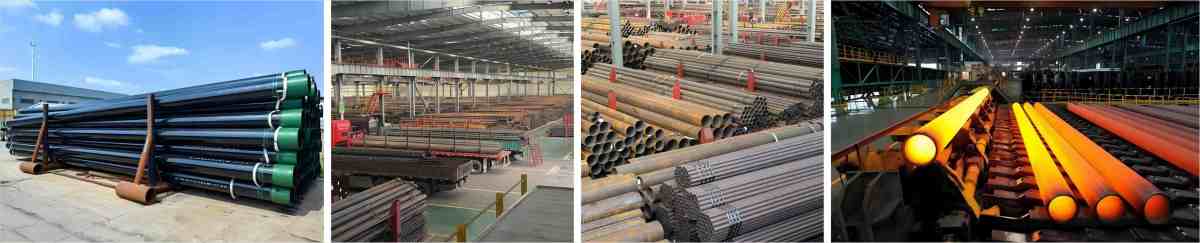
Tier-1 Chinese industrial carbon steel pipe manufacturers offer robust technical professional expertise in delivering high-volume orders. Factories execute strict quality control parameter protocols to guarantee that all export-quality low-temperature pipes fully comply with international standards. Backed by massive continuous rolling mills and deep export experience, these facilities provide a stable supply of materials, custom lengths, protective coatings, and matching pipe fittings—all accompanied by fully traceable Mill Test Certificates (MTC). Procurement teams can also source matching high-yield structural components, including stainless steel sheet, stainless steel coil, and stainless steel bar lines from these integrated networks.
FAQ
What is the main difference between ASTM A333 Grade 6 and ASTM A106 Grade B?
The primary difference is their design temperature limits. ASTM A333 Grade 6 is explicitly engineered for low-temperature service down to -45℃ and requires mandatory Charpy impact testing. ASTM A106 Grade B is optimized for high-temperature service and does not guarantee impact toughness in freezing conditions.
Can ASTM A333 Grade 6 pipes be welded easily in the field?
Yes. Thanks to its low carbon content (≤ 0.30) and precise metallurgical balance, Grade 6 exhibits excellent weldability. It can be welded using standard industrial methods (SMAW, GTAW) provided proper low-temperature filler metals are used to maintain matching impact properties in the weld zone.
PRODUCT LIST
Leave a Reply
Your email address will not be published. Required fields are marked *
Get in Touch
Get real-time quotes
Interested? Leave your contact details.