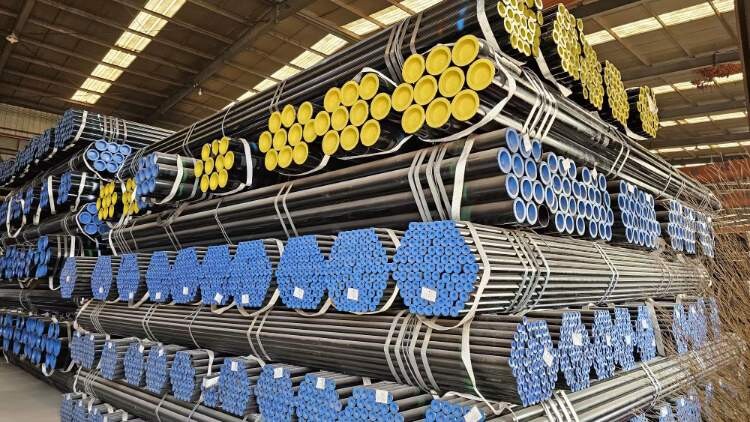
In energy pipeline engineering, choosing the right specification balances project economics with uncompromising safety. The API 5L specification covers seamless and welded steel line pipes for the oil and gas sectors. Within this standard, pipes are divided into two Product Specification Levels: PSL1 and PSL2. While both transport hydrocarbons, their distinct technical and testing frameworks dictate their specific deployment.
Technical Definition: Understanding PSL1 and PSL2
The Product Specification Level (PSL) determines the strictness of quality control and material testing during production.
API 5L PSL1 Pipe: A standard quality grade designed for general, low-risk pipeline applications. It features standard chemical limits and non-destructive testing, serving as a highly cost-effective solution.
API 5L PSL2 Pipe: A premium quality grade with strict chemical ceilings, mandatory notch toughness (Charpy V-notch) verification, and mandatory non-destructive inspections. It delivers full traceability and high pressure capacity for hazardous conditions.

Chemical Composition and Mechanical Properties
The performance differences between these pipeline steel pipe options trace back to their metallurgical control.
Strict Element Control
To optimize field weldability and prevent embrittlement, API 5L PSL2 pipe imposes tighter chemical ceilings. Carbon limits are lower, and detrimental elements like Phosphorus (P ≤ 0.025%) and Sulfur (S ≤ 0.015%) are minimized. This clean chemistry boosts fracture toughness and enhances corrosion resistance.
Enhanced Mechanical Performance
For equivalent steel grades (e.g., Grade X52), PSL2 enforces strict limits on material yield. It mandates a maximum yield-to-tensile strength ratio (≤ 0.93) to ensure the steel deforms predictably under sudden high pressure variations, eliminating rapid, catastrophic failures.
Performance Advantages and Application Scenarios
High Pressure Capacity & Fracture Arrest: Oil and gas line pipe systems encounter severe pressure variations. The mandatory impact testing of PSL2 guarantees excellent fracture toughness, ensuring the pipeline can arrest propagating cracks in demanding environments.
Corrosion Resistance: High-grade API 5L seamless pipe options undergo advanced de-scaling to ensure a smooth inner wall, which reduces friction and scale deposit buildup. This smooth finish, coupled with pure chemistry, prevents localized corrosion from sour gas ($H_2S$), reducing maintenance and securing a long lifespan.
Scenario Matching: PSL2 is mandatory for high-pressure main transmission lines, offshore rigs, and seismic zones. Conversely, PSL1 remains ideal for lower-pressure gathering networks and onshore water lines where mechanical stresses are low.
China Manufacturing Advantages
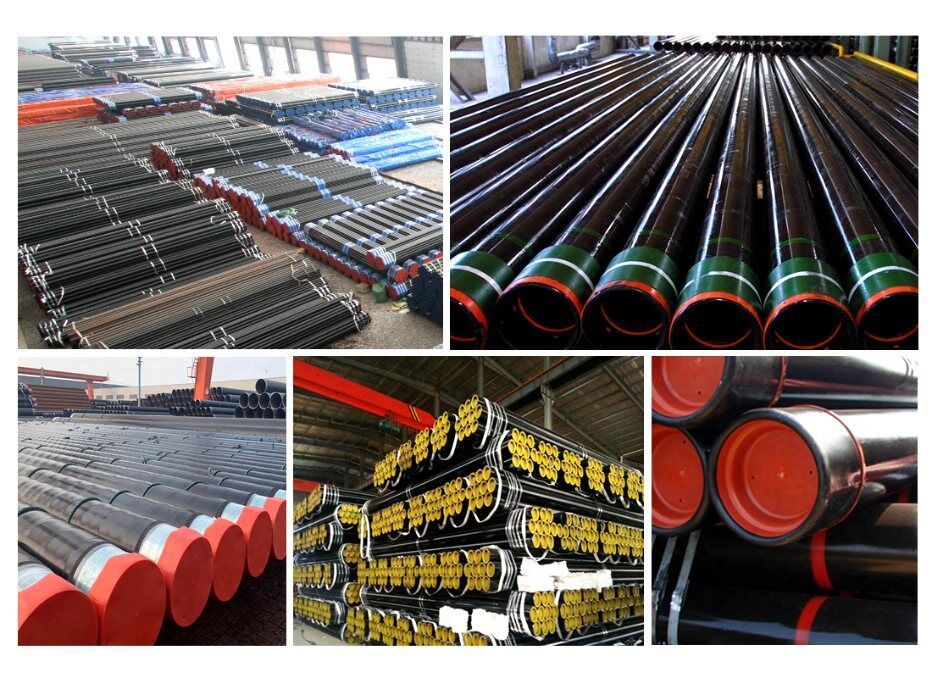
Tier-1 Chinese industrial carbon steel pipe manufacturers offer robust professional expertise in supplying both API 5L welded pipe and API 5L seamless pipe. Utilizing advanced continuous rolling and 100% non-destructive testing (NDT), Chinese mills guarantee stable supply and extensive support for customization (including 3LPE/FBE anti-corrosion coatings and custom wall thicknesses). Every project delivery includes fully traceable Mill Test Certificates (MTC) to satisfy global energy regulations.
FAQ
Can an API 5L PSL1 pipe be substituted for a PSL2 pipe?
No. PSL1 pipes lack the mandatory fracture toughness validation and strict chemical element controls required to handle high-stress, safety-critical PSL2 oil and gas operations.
What is the role of Charpy V-notch testing in PSL2 pipes?
It measures the steel's impact energy absorption, directly verifying that the pipeline steel pipe can resist brittle fracture propagation under extreme thermal or pressure loads.
PRODUCT LIST
Leave a Reply
Your email address will not be published. Required fields are marked *
Get in Touch
Get real-time quotes
Interested? Leave your contact details.