
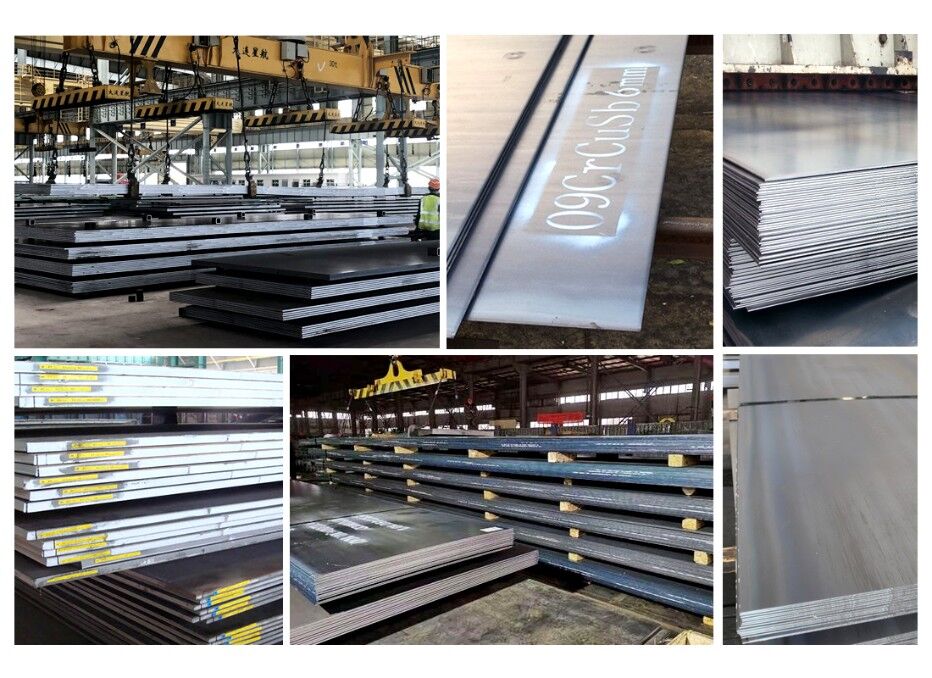
What is the Product: Carbon Steel Plate and Sheet
Carbon steel plates and sheets are foundational flat-rolled products widely utilized across global industrial sectors. While both originate from the same primary manufacturing process of rolling steel billets, their primary distinction lies in thickness, dimensions, and structural application limits.
A carbon steel plate is generally thicker and heavier, designed to bear high structural loads, withstand intense pressure, and provide durability in heavy engineering. In contrast, a carbon steel sheet is thinner, more flexible, and typically supplied in coils or cut-to-length flat panels, making it ideal for forming, stamping, and surface cladding.
As a leading global manufacturing entity in China, TISCO GROUP adheres to stringent international standards—such as ASTM, EN, and ISO—to deliver high-performance flat carbon steel products backed by verifiable Material Test Certificates (MTC) and third-party inspection reports (e.g., SGS, BV).
Grades, Types, and Classification
Understanding material classification is vital for engineering procurement. Carbon steel plates and sheets are classified based on their carbon content, chemical composition, and mechanical properties:
Low-Carbon (Mild) Steel: Contains less than 0.25% carbon. Offers excellent ductility, weldability, and formability, commonly utilized in general fabrication.
Medium-Carbon Steel: Contains 0.25% to 0.60% carbon. Balances strength and ductility, frequently deployed in structural components, shafts, and gears.
High-Carbon Steel: Contains 0.60% to 1.50% carbon. Provides exceptional hardness and wear resistance, suited for cutting tools and high-strength springs.
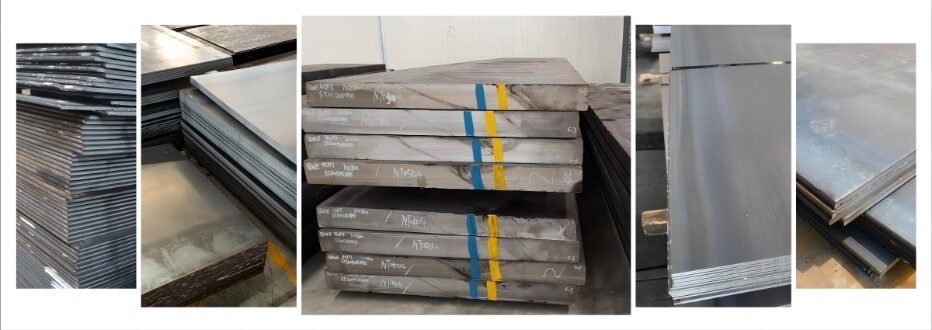
Comparison: Carbon Steel Plate vs. Carbon Steel Sheet
Properties and Advantages
Engineers and procurement specialists select carbon steel flat products due to their superior mechanical reliability and cost-effectiveness. Key technical advantages include:
High Tensile Strength: Capable of sustaining massive structural loads without permanent deformation.
Exceptional Durability: Resistant to impact and mechanical wear under harsh operational environments.
Cost Efficiency: Offers a high strength-to-cost ratio compared to specialized alloy steels.
Excellent Fabrication and Weldability: Low-carbon variants allow seamless cutting, welding, and machining without losing structural integrity.
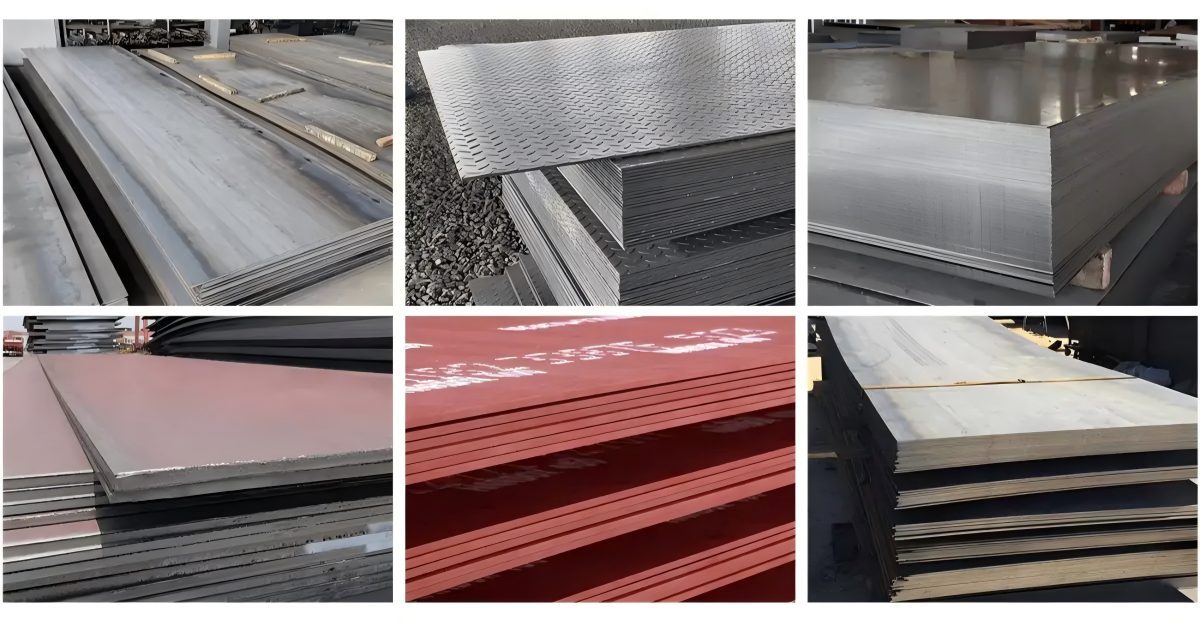
Manufacturing and Surface Treatment
The production of premium carbon steel plates and sheets involves advanced metallurgical processing in our state-of-the-art Chinese manufacturing facilities:
Steelmaking and Refining: High-purity iron ore and scrap are melted in basic oxygen furnaces (BOF) or electric arc furnaces (EAF), followed by ladle metallurgy to achieve precise chemical compositions.
Hot Rolling: Slabs are reheated and passed through heavy rolling mills at temperatures exceeding recrystallization points to determine the initial grain structure and gauge.
Cold Rolling (for Sheets): Hot-rolled coils undergo acid pickling and cold reduction to achieve tighter thickness tolerances, smoother surface finishes, and enhanced tensile strength.
Surface Treatment and Protection: To prevent premature corrosion during global shipping, products undergo surface treatments including oiling, passivation, shot blasting, primer coating, or hot-dip galvanization, meeting stringent ASTM and ISO standards.
Applications
Carbon steel plates and sheets serve as indispensable materials across numerous heavy industries worldwide:
Construction and Infrastructure: Building frameworks, skyscraper columns, bridges, and highway guardrails.
Energy and Pressure Vessels: Oil and gas storage tanks, boiler shells, pipelines, and offshore platforms.
Automotive and Transportation: Chassis components, railway freight cars, shipping containers, and vehicle body panels.
Heavy Machinery: Industrial equipment frames, crane booms, mining machinery, and agricultural implements.
One-Stop Steel Supply (TISCO GROUP)
As a premier Chinese industrial manufacturing and export enterprise, TISCO GROUP provides a comprehensive, one-stop procurement platform for global clients. We bridge the gap between world-class Chinese manufacturing and international project requirements, ensuring seamless cross-border supply chains.
Our core supply portfolio encompasses:
Stainless Steel: Plates, coils, tubes, and bars in various austenitic, ferritic, and duplex grades.
Carbon Steel: Structural plates, commercial sheets, seamless and welded carbon steel pipes.
Galvanized Steel: Hot-dip galvanized coils and sheets offering superior corrosion resistance.
PPGI / PPGL: Pre-painted galvanized and galvalume steel coils tailored for architectural roofing and wall cladding.
Alloy Steel & Specialty Products: Engineered for high-temperature and high-pressure service environments.
Supported by advanced custom supply capabilities—including precision laser cutting, plasma cutting, slitting, bending, and surface brushing—TISCO GROUP tailors products to exact blueprint specifications. Backed by rigorous third-party inspections (SGS, TÜV, BV), comprehensive MTC documentation, and extensive global export experience, we deliver reliable steel solutions to over 100 countries.
Frequently Asked Questions (FAQ)
Q1: What is the main difference between carbon steel plate and carbon steel sheet?
The primary distinction lies in thickness and processing. Plates are generally thicker than 6 mm and used for heavy structural support, whereas sheets are thinner than 6 mm, highly flexible, and supplied in coils or panels for stamping and forming.
Q2: How do manufacturing processes differ for plates and sheets?
Plates are typically produced via hot rolling at high temperatures. Sheets often undergo hot rolling followed by cold rolling (cold reduction) to achieve tighter thickness tolerances, smoother surface finishes, and thinner gauges.
Q3: How do I select the right carbon steel grade for my structural project?
Selection depends on load requirements, environmental conditions, and fabrication needs. Low-carbon steel is ideal for general welding and forming, while medium-to-high carbon grades are chosen when higher tensile strength and wear resistance are required.
Q4: How is corrosion prevented during international shipping?
TISCO GROUP applies protective measures including anti-rust oiling, moisture-barrier packaging, waterproof wrapping, and robust wooden pallet crating. We also offer galvanized and coated steel alternatives to combat corrosive environments.
Q5: What quality assurance and export documents are provided?
Every shipment from TISCO GROUP includes a comprehensive Material Test Certificate (MTC) detailing chemical composition and mechanical test results. We also welcome independent third-party inspections by agencies like SGS or BV prior to dispatch.
PRODUCT LIST
Leave a Reply
Your email address will not be published. Required fields are marked *
Get in Touch
Get real-time quotes
Interested? Leave your contact details.